
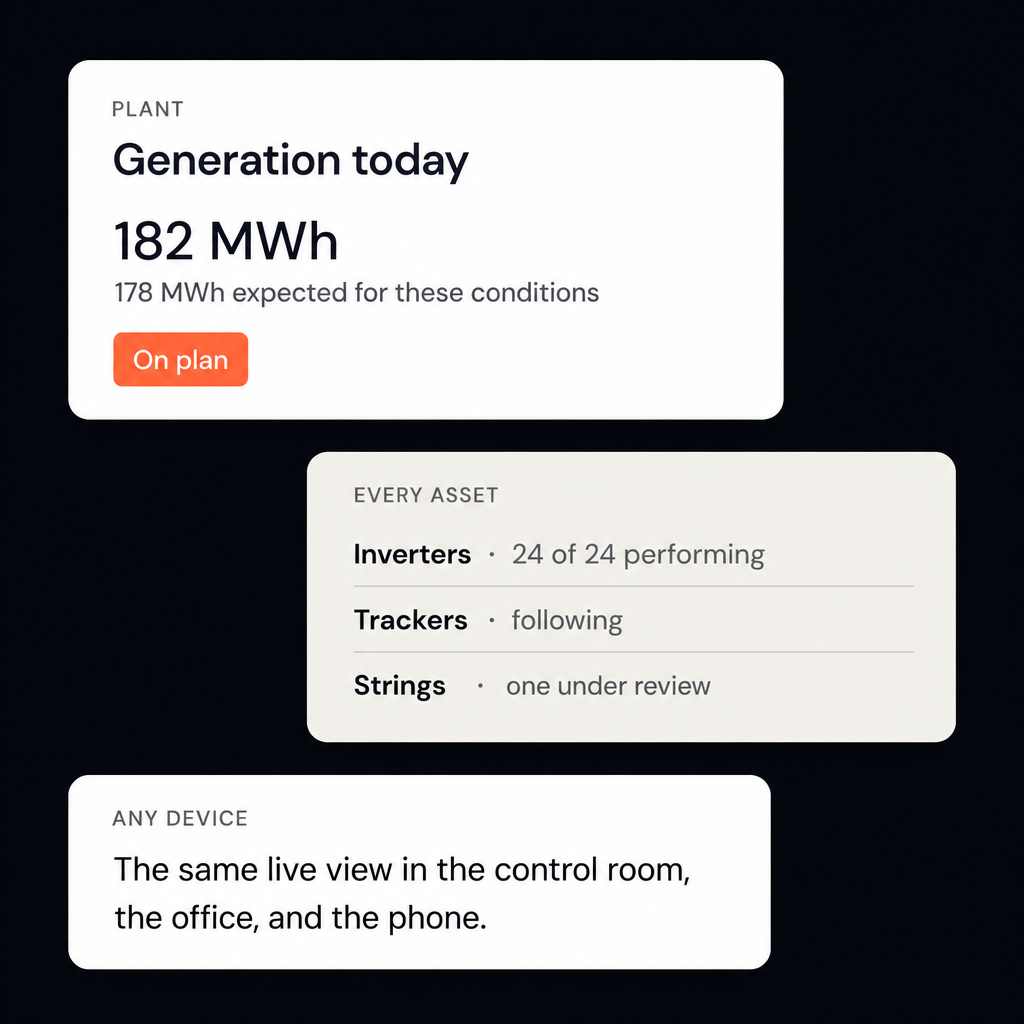
See how every asset is performing.
The system analyzes your plant's full operating record, and Data Link turns it into live performance dashboards and corporate statistics, on any device.
Plant Monitoring & Control
One system supervises your plant and manages its generation, whatever manufacturers built its parts. The SCADA (supervisory control and data acquisition) layer watches every inverter, tracker, meter, and relay in real time and keeps the historical record. The EMS manages generation: setpoints, curtailment, and dispatch within grid limits.
We design, integrate, and commission this system on site with your team. The equipment comes from the manufacturers that fit your needs and budget.
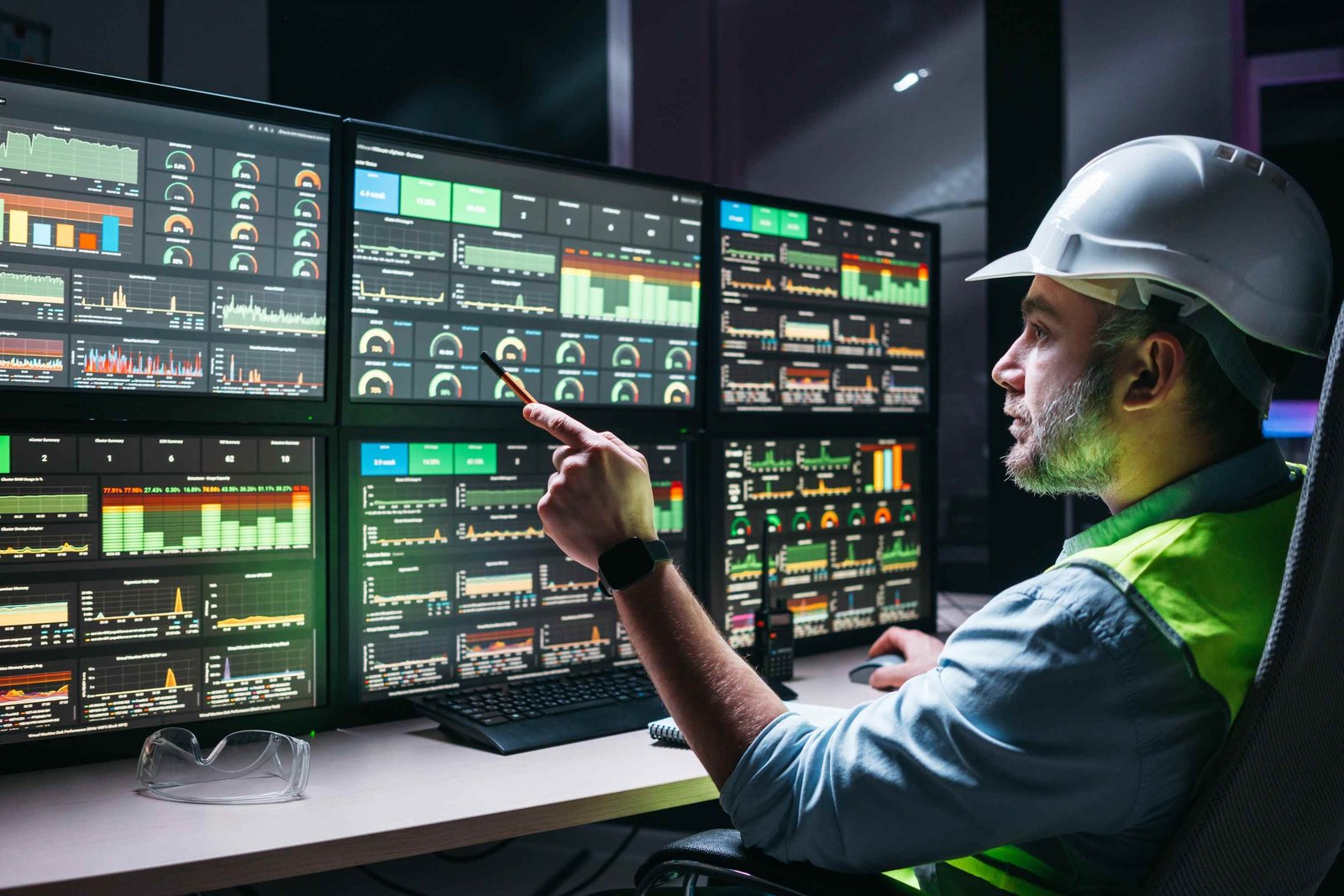
Beyond monitoring
A modern SCADA has to include machine learning, big data, and data analytics to read them. Working on your plant's own operating record, they change what you can see, decide, and anticipate.
The system analyzes your plant's full operating record, and Data Link turns it into live performance dashboards and corporate statistics, on any device.
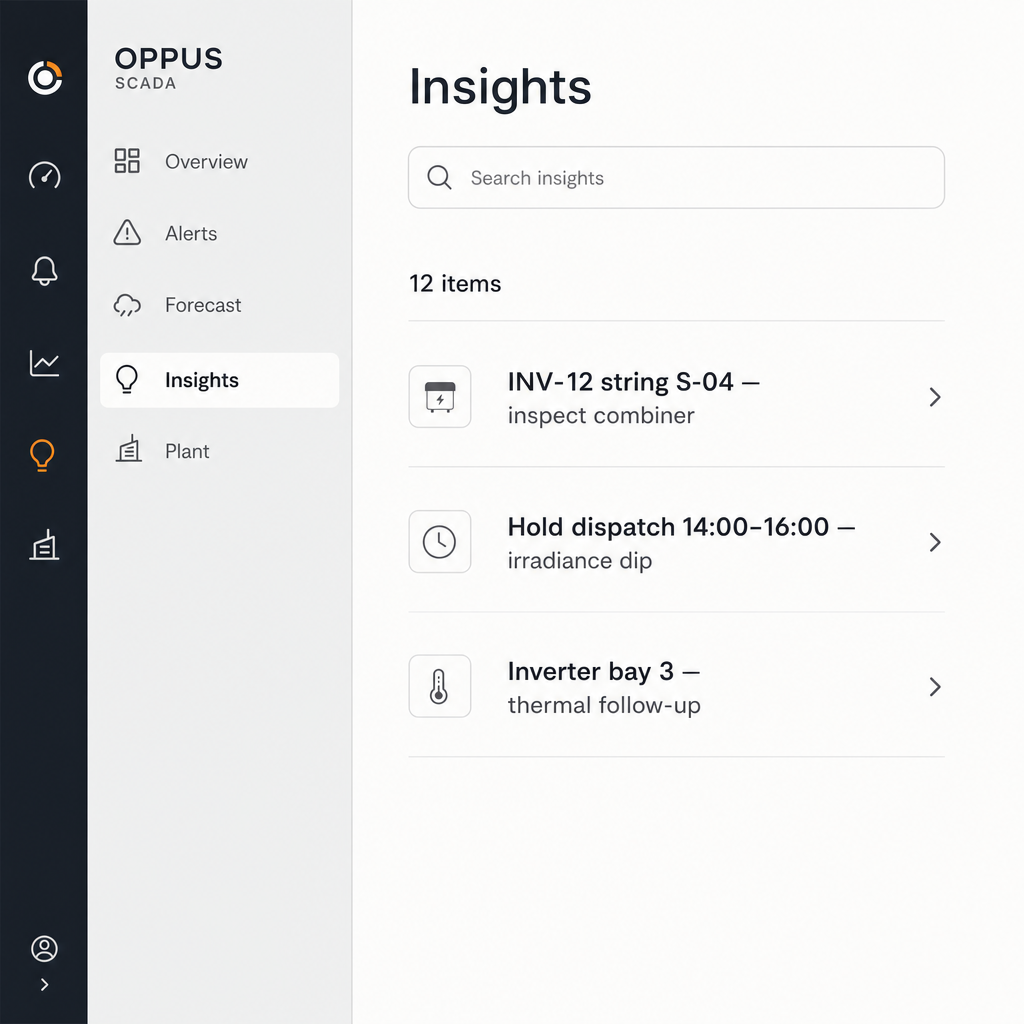
Analysis and AI (artificial intelligence) find the patterns that matter in your operational metrics: where performance is being lost, and what to act on first.
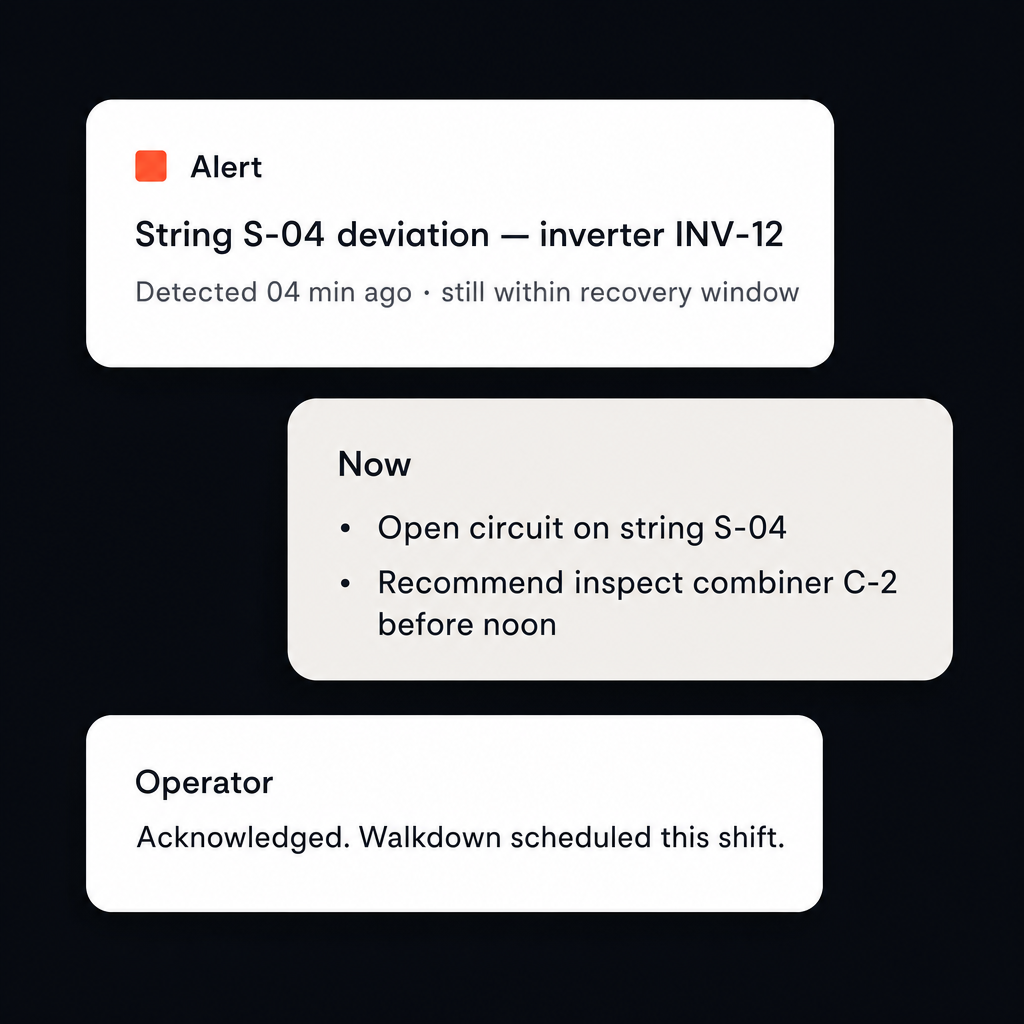
Predictive maintenance reads your plant at inverter and string level, where averages hide problems. Forecasting extends the same read ahead: generation, environmental, and meteorological.
Capabilities
This list is not a template your plant is asked to fit. It is the full capabilities set of every system we deliver, adapted at implementation to your plant's requirements.
Your plant's full operating record, kept for the life of the plant.
Every inverter, tracker, meter, and relay, live in one picture.
The system runs on phones, tablets, and workstations.
Alarms are set per asset and per severity, configured around your operation.
Screens, alarms, reports, and KPIs are configured around your operation, not shipped as generic defaults.
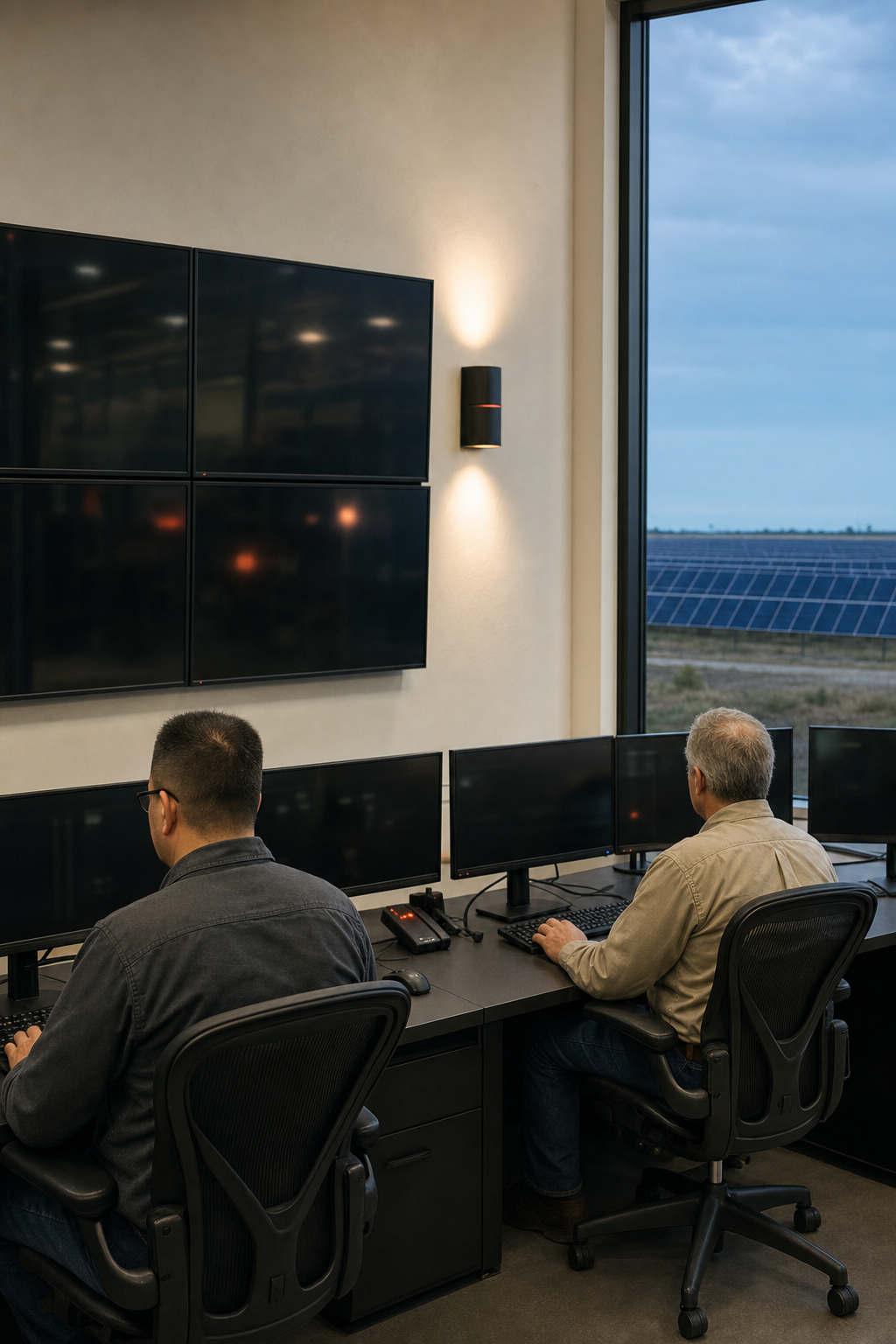
Your operators run the plant from a dedicated control-room application, designed for fast reading and immediate action.
Reports built from the historical database, shaped to what each stakeholder needs: the owner, the O&M contractor, the grid operator.
Long-term trends are managed and analyzed inside the system, across days, seasons, and years, so degradation and seasonal patterns surface in time to act.
Maintenance work lives in the same system that raises the alarms: an alert becomes a task, tracked where the plant is run.
Plant data flows into your enterprise resource planning (ERP) system.
Protocols
Our systems communicate natively over the protocol your plant already uses.
Native maps from inverters, meters, and field devices.
Telecontrol over TCP/IP for RTUs and grid interfaces.
Substation and protection devices in one data model.
Utility-grade polling and unsolicited event reporting.
Vendor-neutral access across the platforms the plant already runs.
Technical Know How
Our engineering know-how spans the platforms and technologies plants actually run on.




We deliver every system the same way: designed around your plant, integrated as one system, commissioned on site, and supported by the engineers who built it.
We start from your plant: its requirements, its device schedule, its manufacturer mix. We adapt the equipment to your plant, not the other way around.
Equipment from the manufacturers that fit your needs and budget is integrated into one data model, one alarm path, and one historical record. You issue the requirements; we make everything work together as one system.
We commission the system on site, shoulder-to-shoulder with your team. Acceptance is verified together, on the real plant, before handover.
After go-live, you speak directly with the engineers who built your system, at any hour, with no ticket queue in between. In the past, we have given support within minutes.
Every system we deliver carries a warranty on supplied equipment. Terms are defined in your contract and honored by the engineers who built your system.
A SCADA (supervisory control and data acquisition) system supervises the plant and acquires its data: it watches every inverter, tracker, meter, and relay in real time, keeps the historical record, raises the alarms, and executes operator commands. An energy management system (EMS) manages generation: it decides what the plant should do (setpoints, curtailment, dispatch within grid limits) and produces the reporting that reflects it.
In a well-engineered plant these are not two products to choose between. They are two jobs, supervision and generation management, and one properly engineered system does both. That is why we deliver a single system under both names: SCADA & Energy Management System (EMS). The useful question is not "SCADA or EMS?" but "is the SCADA I am evaluating engineered for generation management, or does it stop at supervision?"
On the supervision side: protocol depth, historian and data ownership, alarms that become work. On the management side: setpoints and curtailment, dispatch, and stakeholder reporting.
It continuously collects data from every device in the plant, presents it as one real-time picture, and lets your operators act: alarms, setpoints, control commands, from the control room or remotely. Its value is not the software itself. It is that every manufacturer on your site speaks to the same system.
Related solutions
Two more pieces of your plant's monitoring and control, engineered to work as one system.
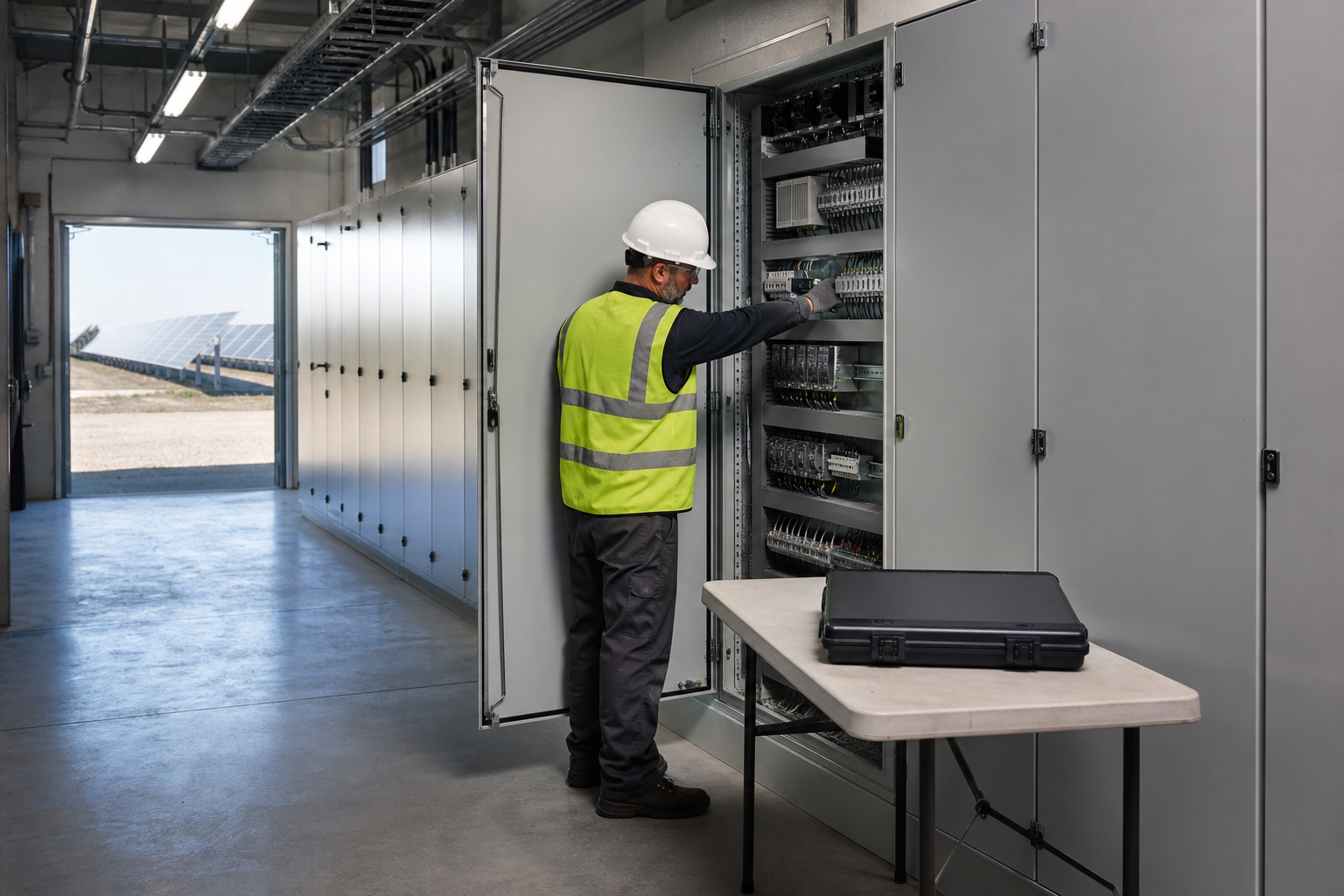
Industrial controllers programmed for your plant's protection and control logic. The layer that acts in milliseconds when it matters.
Explore the solution →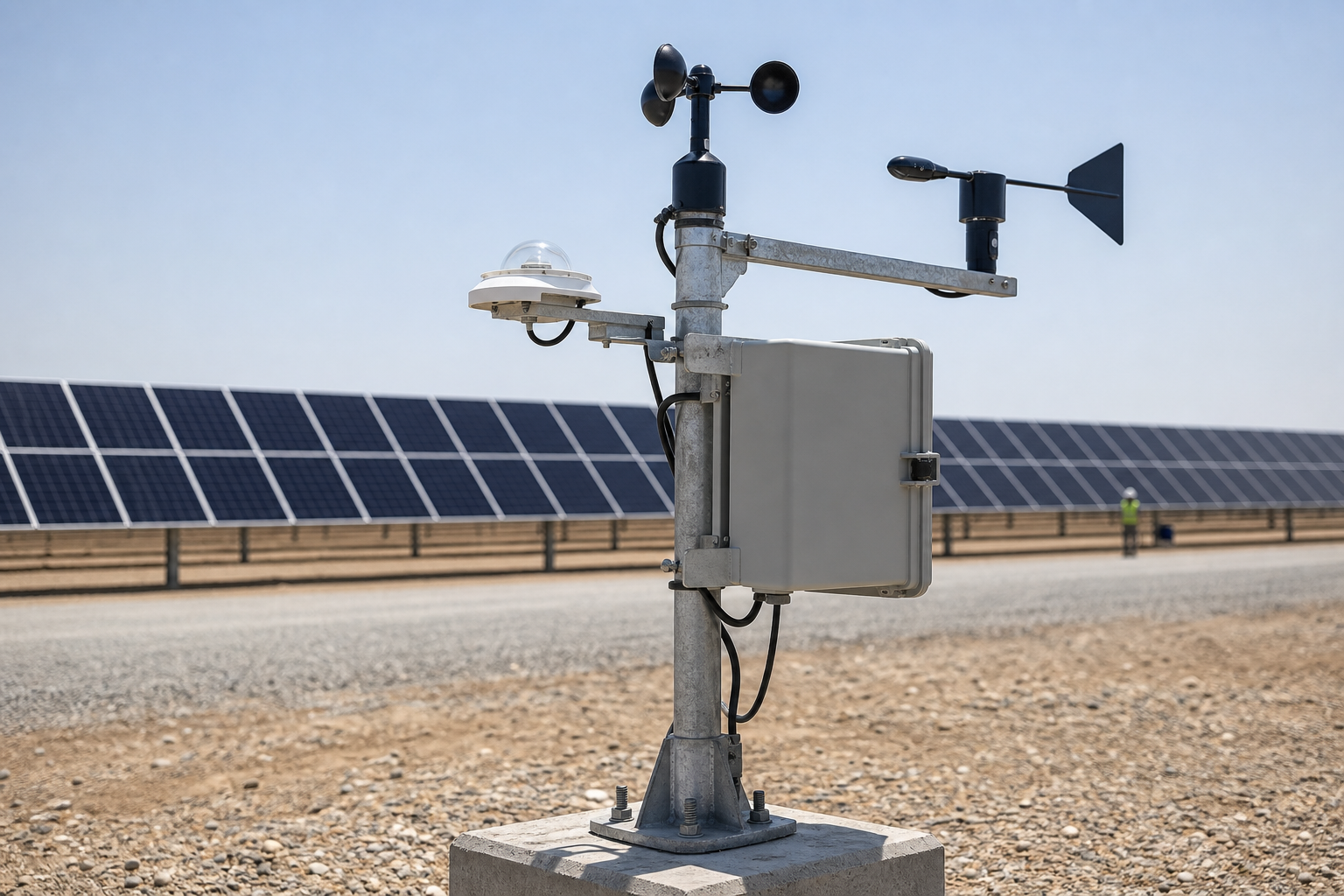
Plant-grade weather data on irradiance, wind, and panel temperature, so you can predict generation and protect equipment.
Explore the solution →Every plant's mix is its own: manufacturers, protocols, grid requirements, and the reports your stakeholders expect. Tell us what your plant runs on, and we will tell you how it becomes one system.


