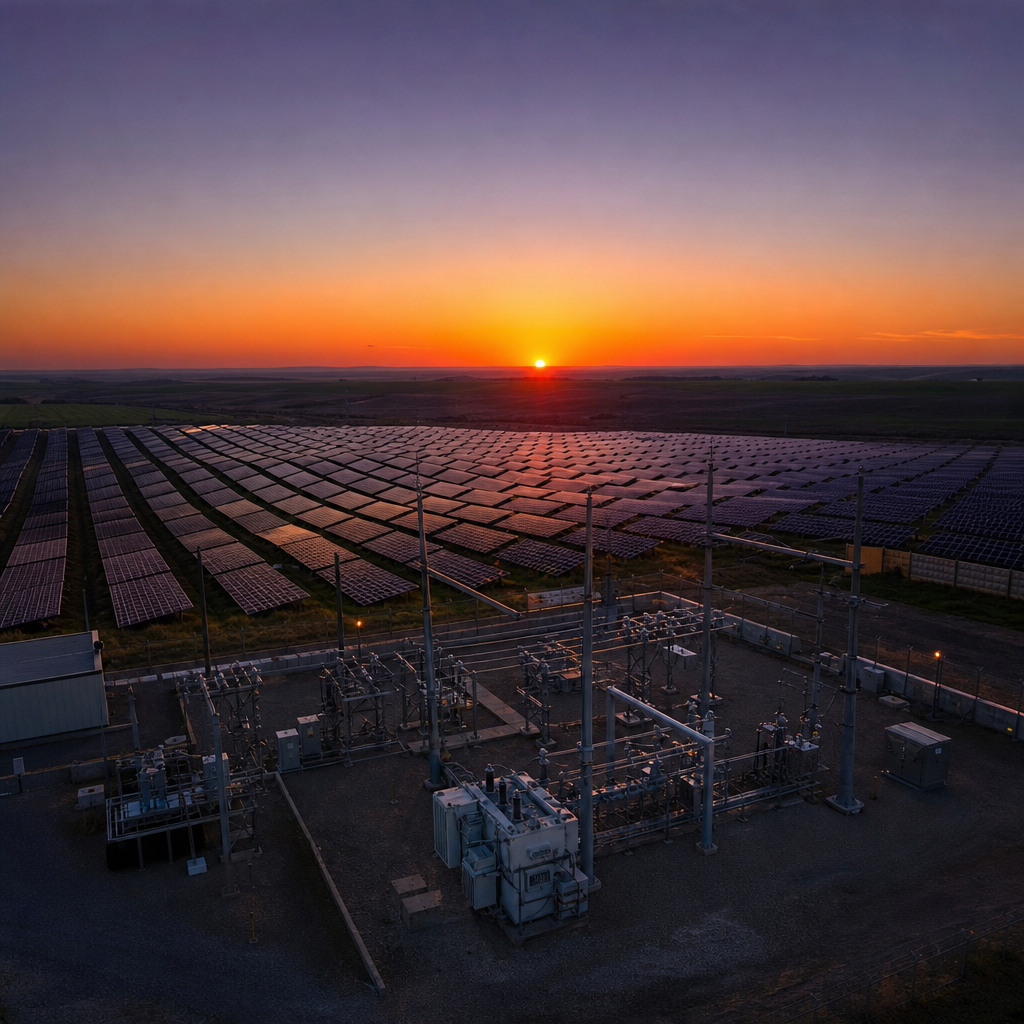
Plant Monitoring & Control

Store energy when it is abundant. Dispatch it when it is valuable: Battery Energy Storage (BESS) for solar plants.

A battery energy storage system lets your solar plant hold the energy it produces and release it when the grid, the market, or your own operation values it more. Our scope is explicit: the batteries and the battery management system (BMS), engineered and integrated by the same partner who connects them to your plant.

Storage is engineered into your plant's monitoring and control, not bolted on beside it. Our Power Plant Controller runs PV-only or PV+BESS, so batteries, BMS, and plant control can be bought separately, or together as one plant architecture. The equipment is adapted to your plant, not the other way around.

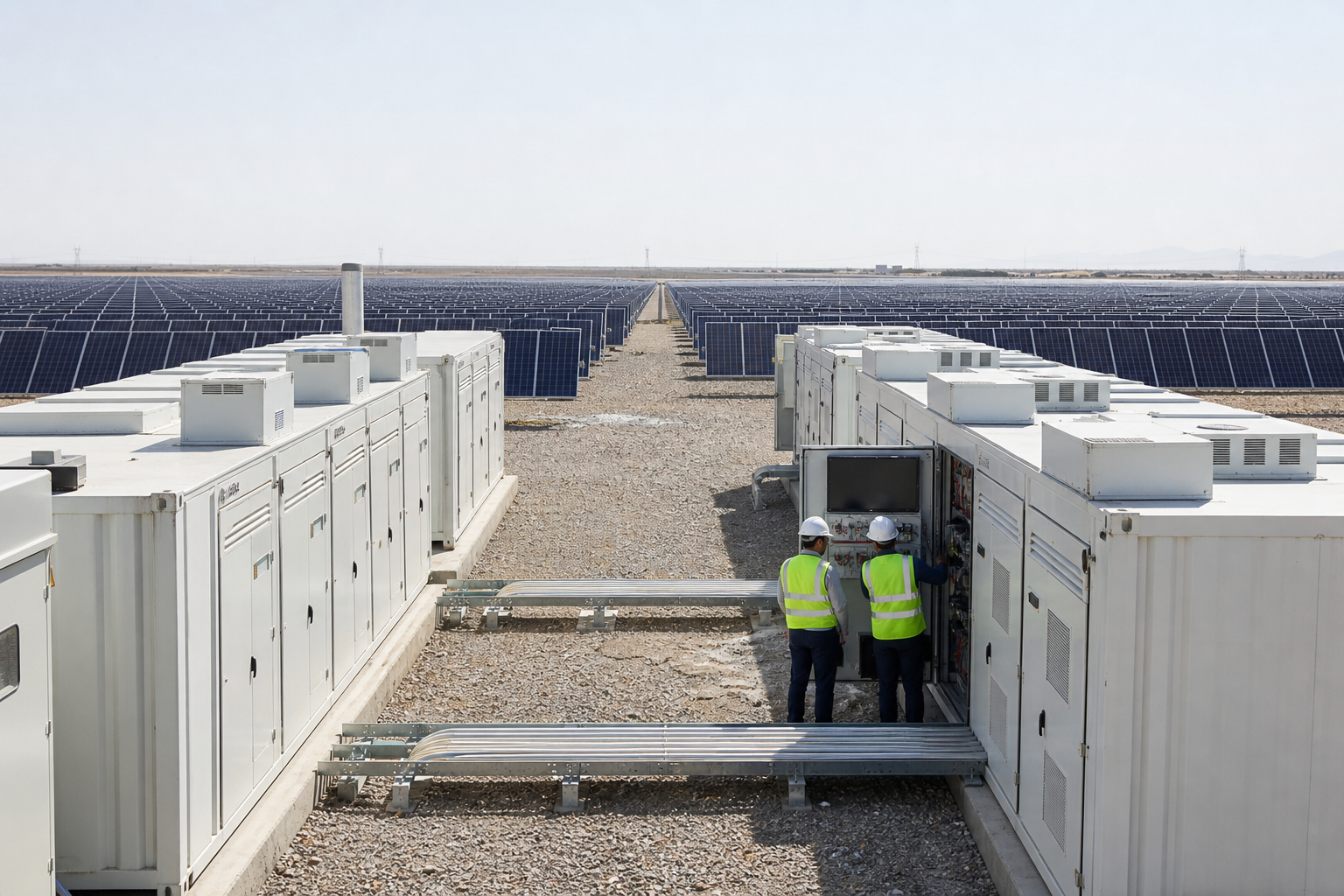
Engineers integrating a battery energy storage system with a solar plant's control architecture.

The case for storage

What storage is for

A solar plant does not add storage for its own sake. It adds storage because it is already paying for one of these three problems.

Utility-scale solar plant connection showing demand charges on the grid tie when generation falls short of scheduled delivery.

Peak and demand charges the plant still pays.

A solar plant sells energy, but it also buys it. The connection carries demand charges that do not shrink because the plant generates. Shortfalls against the delivery schedule are settled at the prices of the hour they happen. For a solar plant, those are often the expensive hours. Storage charged from your own generation covers that draw with energy the plant already produced.
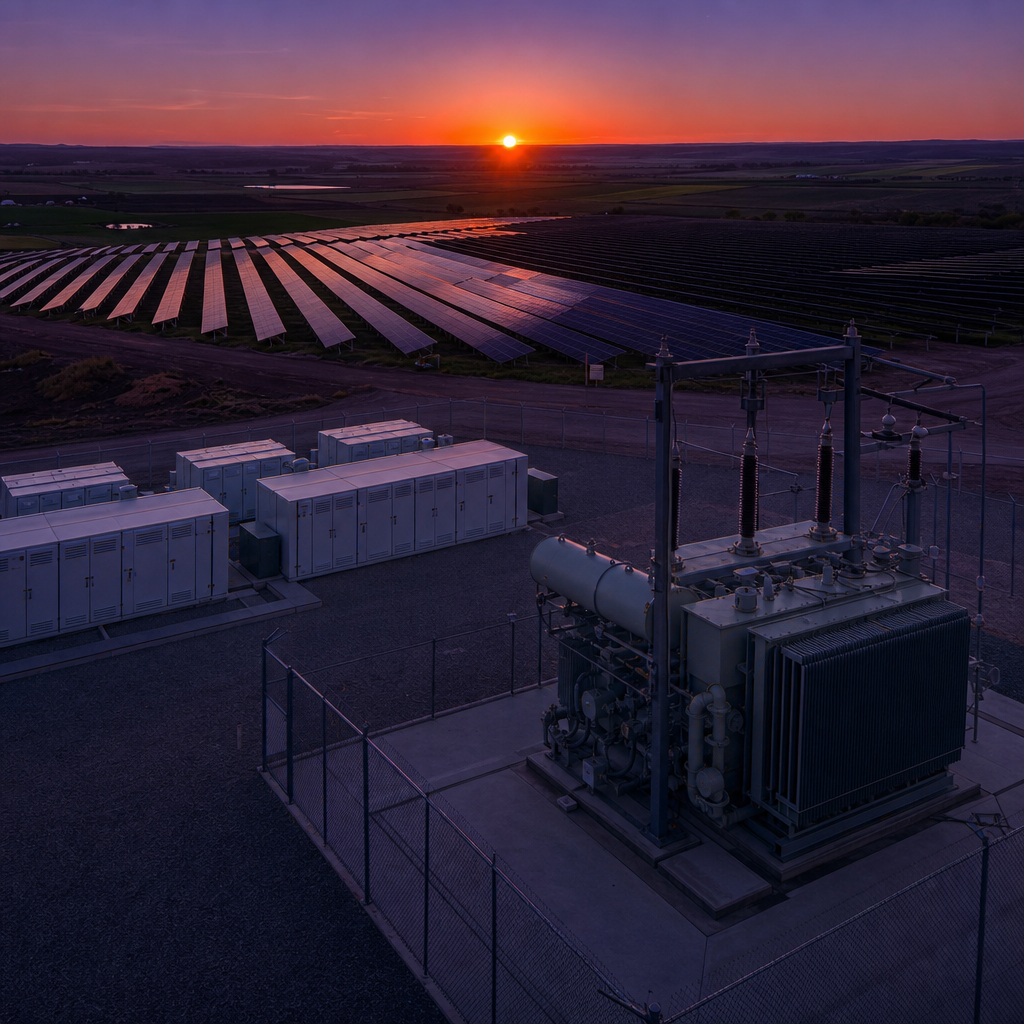
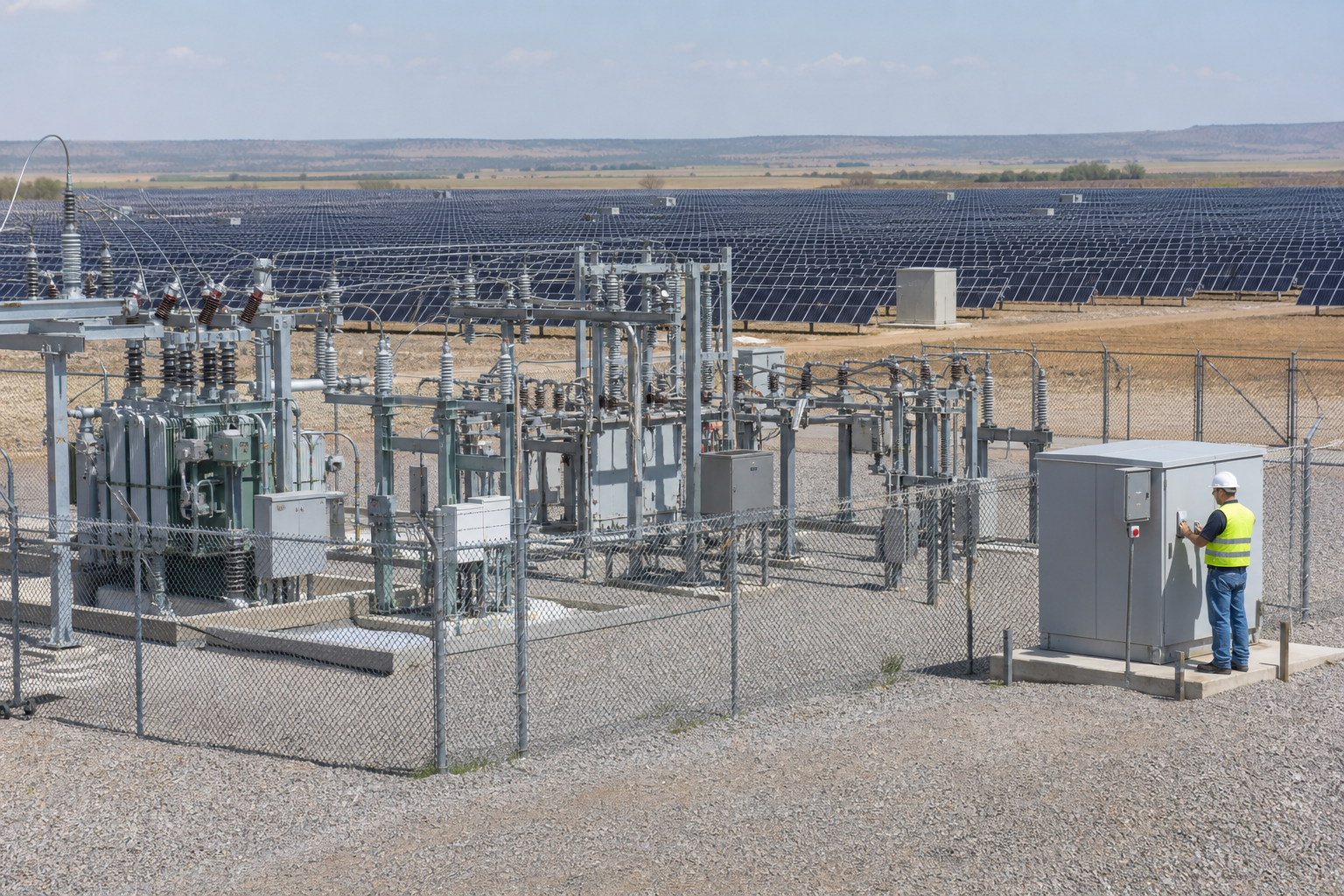
Solar plant at its interconnection export limit with surplus generation curtailed at the main transformer.

Curtailment shifting at the interconnection limit.

The interconnection agreement and the main transformer set a hard ceiling on what the plant can export. When production rises above that ceiling, the excess is curtailed: energy the plant made and could not deliver. Storage absorbs the surplus and dispatches it later through the same connection. The limit stops deciding how much of your generation reaches the grid.

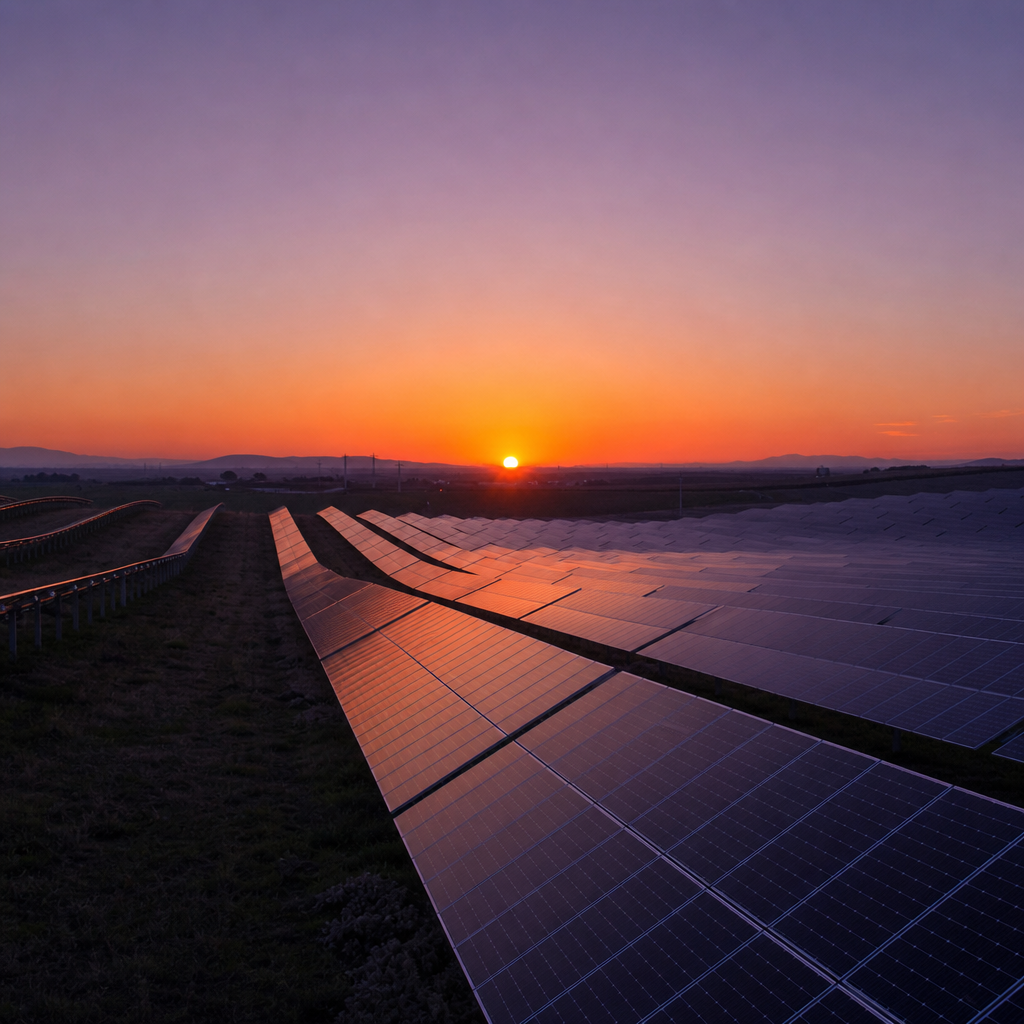
Solar generation peaking at midday while market prices rise later in the day without stored energy to dispatch.

Time-shifting generation that cannot be dispatched when it is valuable.

A solar plant produces on the sun's schedule. In many markets, the hours of highest production are the hours of lowest value. When prices rise, a plant without storage has nothing left to sell. Storage holds part of that generation and releases it when dispatch is worth more.

What the plant gains

The generation your plant already has, now placeable.

Storage does not add generation. It changes where the generation the plant already has can go.

  1. You have energy to sell when the hour is worth more.

    Part of the day's generation is held instead of sold at the hour's price. When dispatch is worth more, the plant still has energy to sell.

  2. Surplus generation still reaches the grid.

    Storage gives the surplus somewhere to go. Generation above the connection's limit is held and delivered later, through the same interconnection.

  3. The delivery you scheduled is backed by stored energy.

    When production falls short of the delivery schedule, stored generation covers the difference. The commitment holds because the plant kept part of what it made.

  4. Your generation covers the plant's own draw.

    The draw the plant places on its connection is met with energy the plant produced and kept. What it still buys is what storage cannot cover.

The basics, in plant terms

What is a BESS, and how does it work?

BESS stands for battery energy storage system. At a utility-scale solar plant, it is the equipment that stores energy electrically and dispatches it later: the batteries that hold the energy, and the battery management system that keeps every cell within safe operating limits. It turns generation the plant cannot deliver at that moment into generation you dispatch when it is worth more.

The batteries charge when the plant produces more than the grid or your schedule calls for, and discharge when dispatch is more valuable. The BMS watches every cell: state of charge, temperature, and voltage. The plant's control system decides when to charge and discharge, and the BMS keeps those decisions within the battery's limits.

They are engineered to be, and every credible vendor answers the question with specifics: safety certifications and test standards at cell, module, and system level; thermal event prevention, detection, and response; alarms that report into the plant's monitoring, where your team can see them. Our evaluation checklist lists the safety questions any vendor should answer.

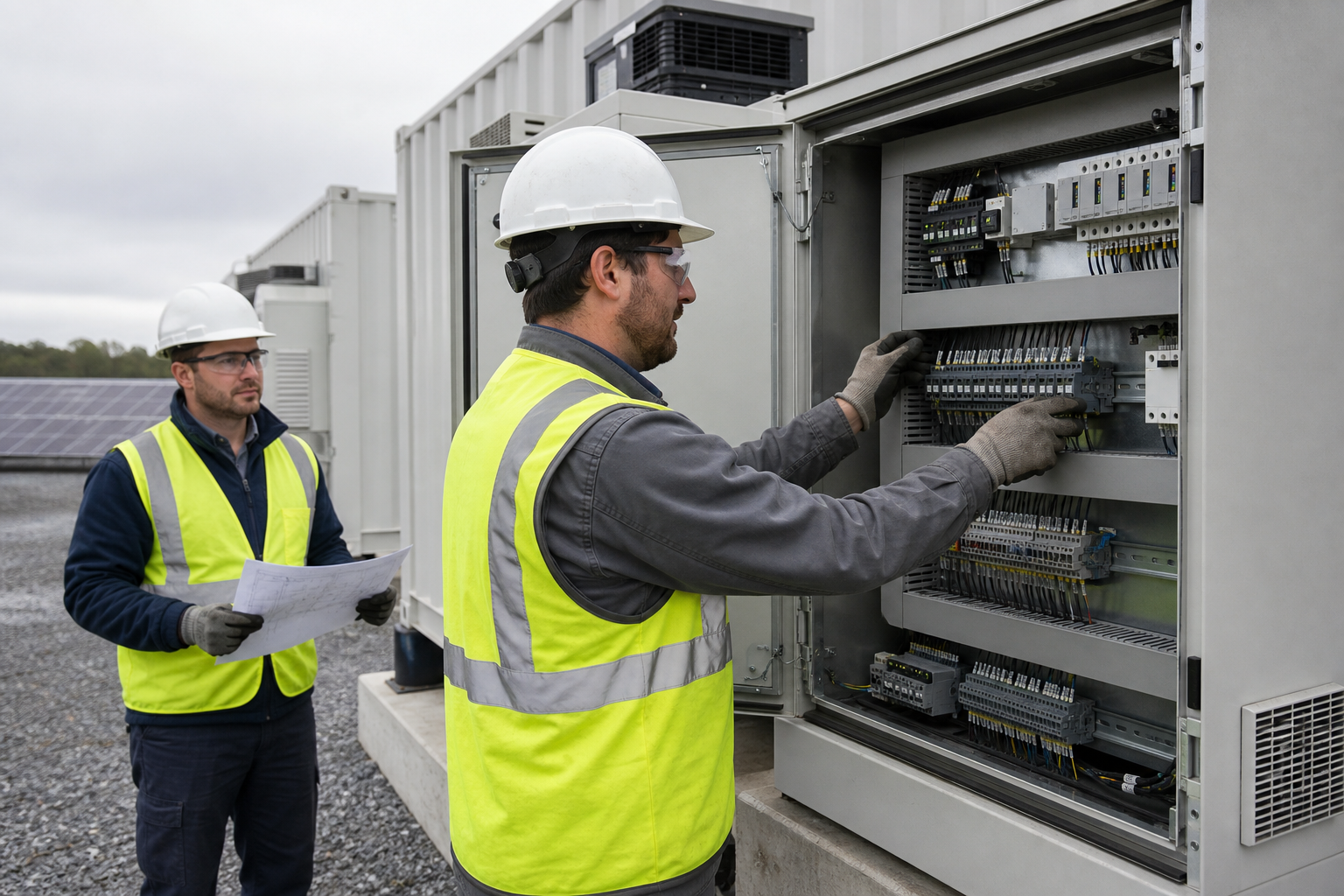
Engineers at a BESS cabinet during commissioning, with battery management and plant control interfaces in view.

Capabilities

What our BESS scope covers

We do not publish a fixed catalog of battery models and capacities, because your plant's architecture decides the equipment. What we deliver is the engineering that makes it one system.

  • Selected around your plant

    Battery system selected around your plant, from the manufacturers that fit.

  • Cell-level supervision

    Cell-level supervision of state of charge, temperature, and voltage — the BMS.

  • PPC for PV+BESS

    We configure the power plant controller for your storage plant.

  • The plant's control architecture

    Charge and discharge executed inside the plant's control architecture.

  • The same SCADA

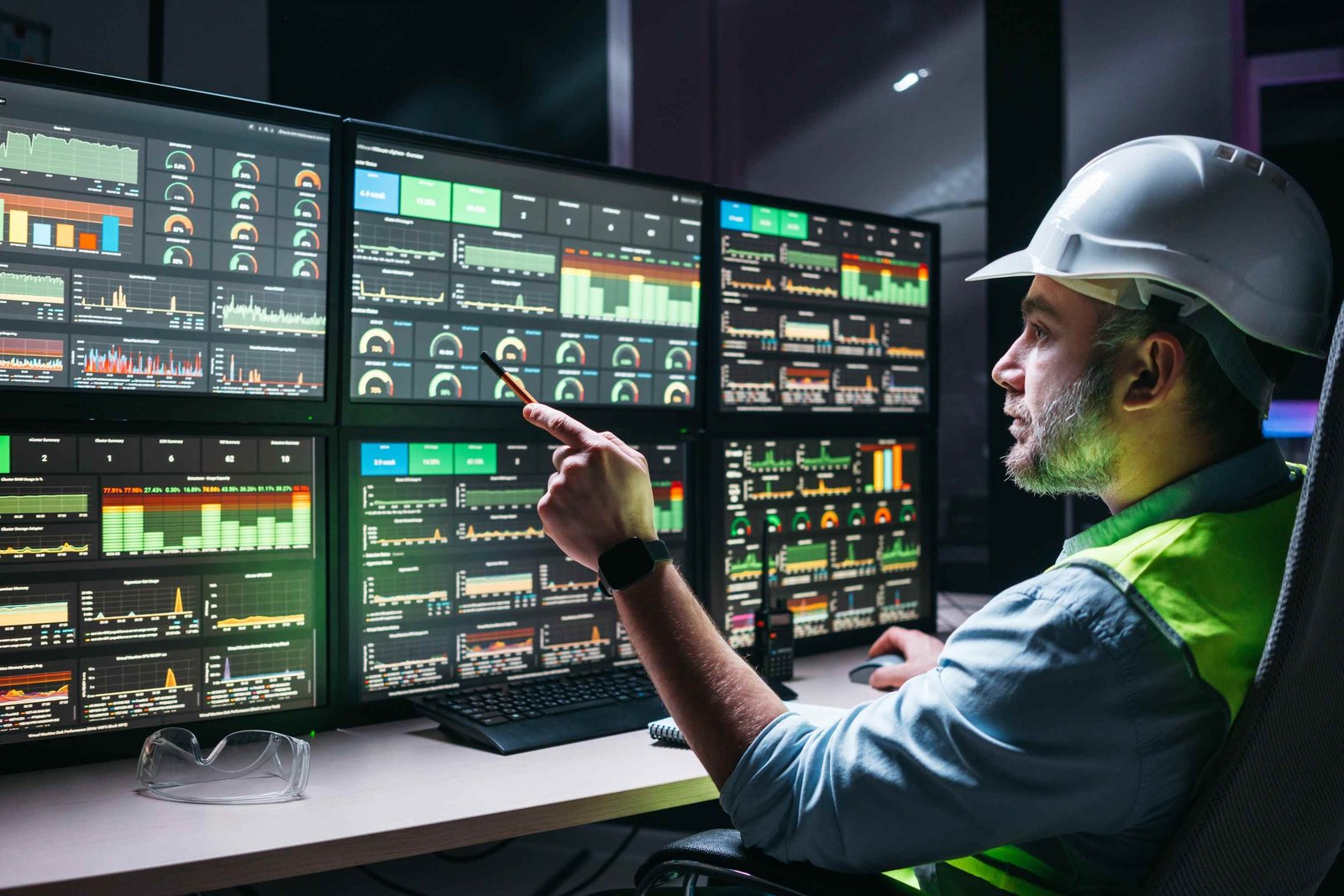
    Storage visible in the same SCADA as the rest of your plant.

  • One accountable counterpart

    Batteries, BMS, and plant control engineered by one accountable counterpart.

  • Commissioned on site

    Commissioned on site, shoulder-to-shoulder with your team.

Every system we deliver carries a warranty on supplied equipment, with terms defined in your contract.

How we deliver

From requirements to a commissioned system

What does not depend on the market is the architecture. Storage earns its place when the batteries, the BMS, and the plant's control are engineered as one system, visible and dispatched from the same place as the rest of the plant.

That integration is our work. We research, source, integrate, and commission the storage scope inside your plant's monitoring and control, on site, with your team.

  1. Research and source around your plant.

    Every plant is different: its interconnection, its market, its existing control systems, its budget. You issue the requirements. We handle the research. We select and source the batteries and the battery management system from the manufacturers that make sense for your needs and budget. The equipment is fitted to your plant, not the other way around.

  2. Integrate batteries, BMS, and plant control as one system.

    We make the batteries, the BMS, and your plant's monitoring and control work together as one system, whatever the manufacturers behind them. Communication, dispatch logic, and alarms are engineered as one scope.

  3. Commission on site, with your team.

    Every operating mode is tested in the real plant before handover. We work alongside your team until the system runs as designed. The people who will run it learn it as it comes online.

Define the scope before you spend on equipment.

Tell us about your plant, your market, and what your financial model needs. You will speak directly with an engineer, and the answer will be specific to your plant.

Talk to an engineer