

Written as part of one system
The protection and control logic your design specifies is programmed into the controller during construction, engineered alongside the SCADA and PPC it works with.
Plant Monitoring & Control
Every solar plant runs on logic its design depends on. Programmable logic controllers (PLCs) execute that logic at device level, in milliseconds: the protection and control decisions that act on a fault before it becomes damage. We program those controllers and integrate them into your plant's monitoring and control system, so the behavior your design specifies is the behavior your plant executes.
The controllers are chosen around your plant, from the manufacturers that fit your needs and budget. The work is delivered as part of one integrated system: engineered, programmed, and commissioned on site with your team.

How we deliver
A solar plant's design specifies behavior, not only equipment: which conditions trip a circuit, which interlocks protect a transformer, how the plant reaches a safe state. We write that behavior into your controllers, prove it on the real plant, and stand behind it after go-live.
The protection and control logic your design specifies is programmed into the controller during construction, engineered alongside the SCADA and PPC it works with.

Trip conditions, interlocks, and safe-state sequences are documented and exercised on the real plant before handover. Your team receives a system it can read.
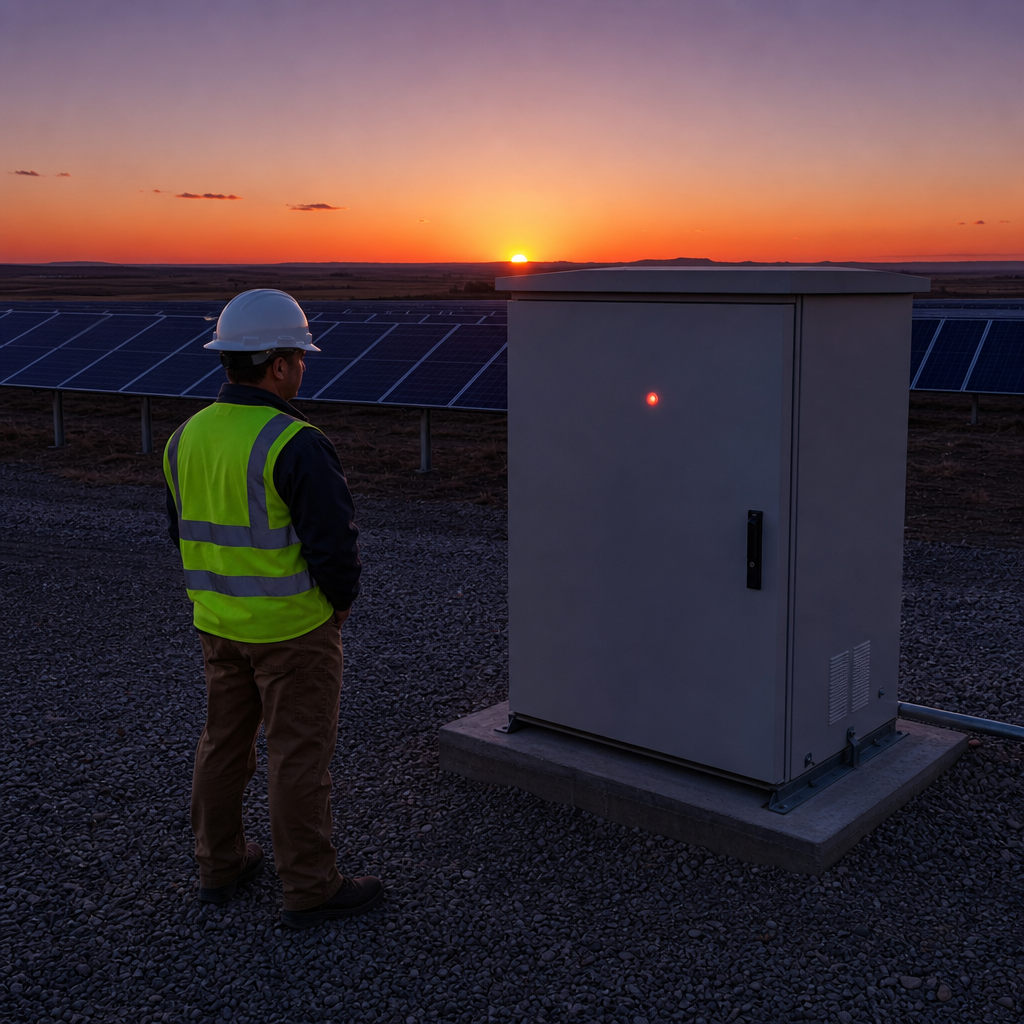
The engineers who programmed your logic remain the people you can reach. When the plant needs a change, you speak with the people who wrote it.
Service scope
As an engineering service, the scope below is what we program, integrate, and commission. The controllers themselves are selected around your plant's design and its existing manufacturer mix, not from a fixed template stack.
The decisions that keep a fault from becoming damage: trip conditions, interlocks, and safe-state sequences, written into the controller and executed at device level in milliseconds.
The behavior your plant's design specifies: how equipment starts, stops, and coordinates, and how the commands your PPC issues are carried out at device level.
Every controller reports into the same system that supervises your plant: one data model, one alarm path, one historical record. The PLC acts; the SCADA supervises.
The PLC layer executes the control logic the PPC commands, so requirements decided at plant level become action at device level.
The logic is verified on the real plant before handover: every interlock exercised, every trip path proven, every sequence accepted together.
After go-live, you speak directly with the engineers who built your system, at any hour, with no ticket queue in between. In the past, we have given support within minutes.
Where your project includes supplied equipment, that equipment carries a warranty, with terms defined in your contract.
Where the PLC layer sits
In an Oppus system the division of labor is clear. Because we engineer all three layers, no logic is lost between them. The setpoint the PPC issues is the action the PLC executes, and the result is visible in the SCADA record.
Your Power Plant Controller (PPC) computes what the plant should do to meet grid and operating requirements.
The PLC layer executes those commands at device level, in milliseconds: the protection and control decisions that act on a fault before it becomes damage.
Your SCADA supervises, visualizes, and records, so your operators see one plant instead of a collection of devices.
That is how we deliver them: one accountable partner for command, execution, and supervision.
Related solutions
PLC logic does its work inside a larger architecture. Four more pieces of your plant's monitoring, control, and protection, engineered to work as one system.

Real-time monitoring and control of your entire plant: every inverter, tracker, meter, and relay in one system, whatever the manufacturer.
Explore the solution →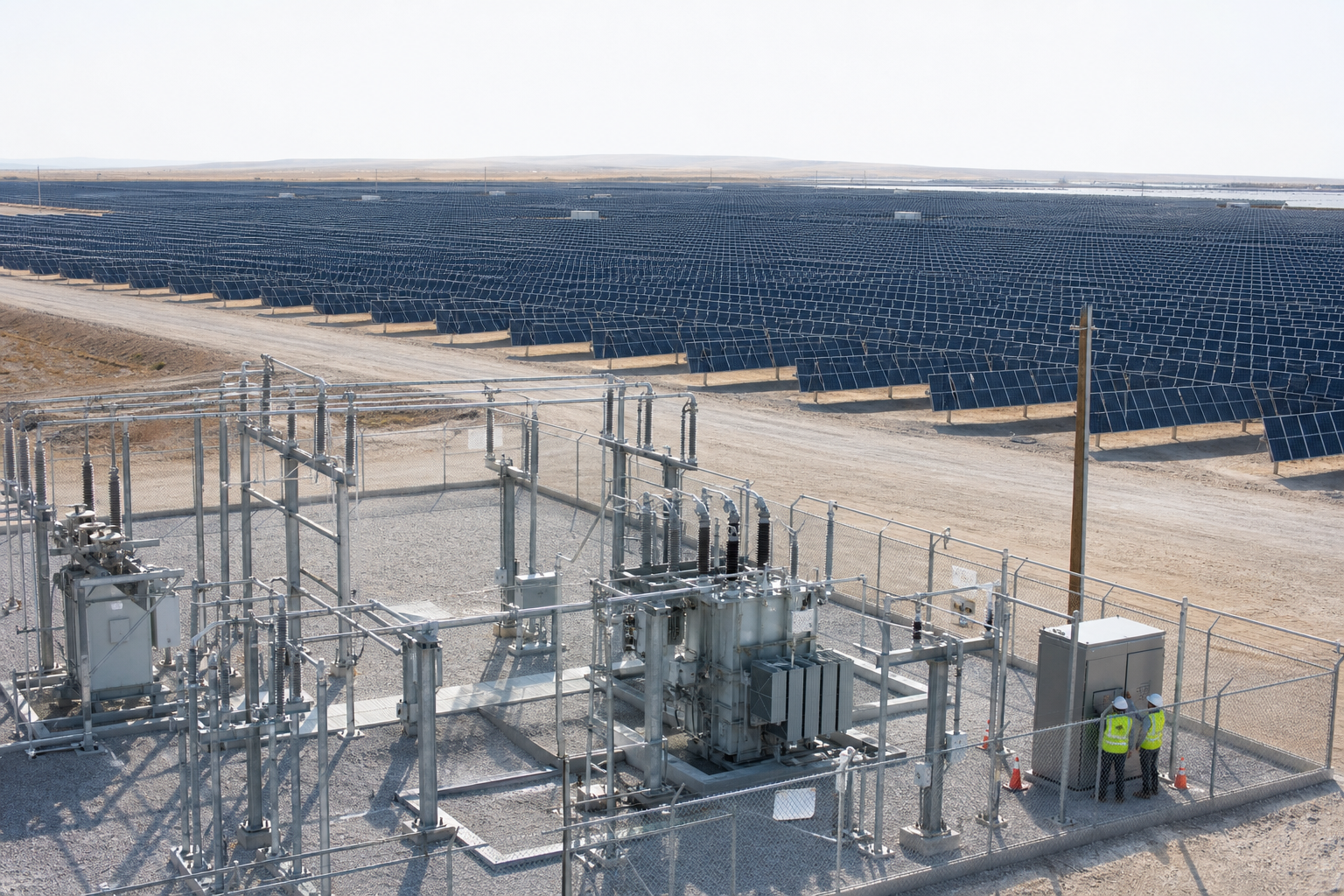
The on-site controller that keeps your plant within grid-code limits and dispatching at its best, automatically, in real time. The PPC commands; the PLC layer executes.
Explore the solution →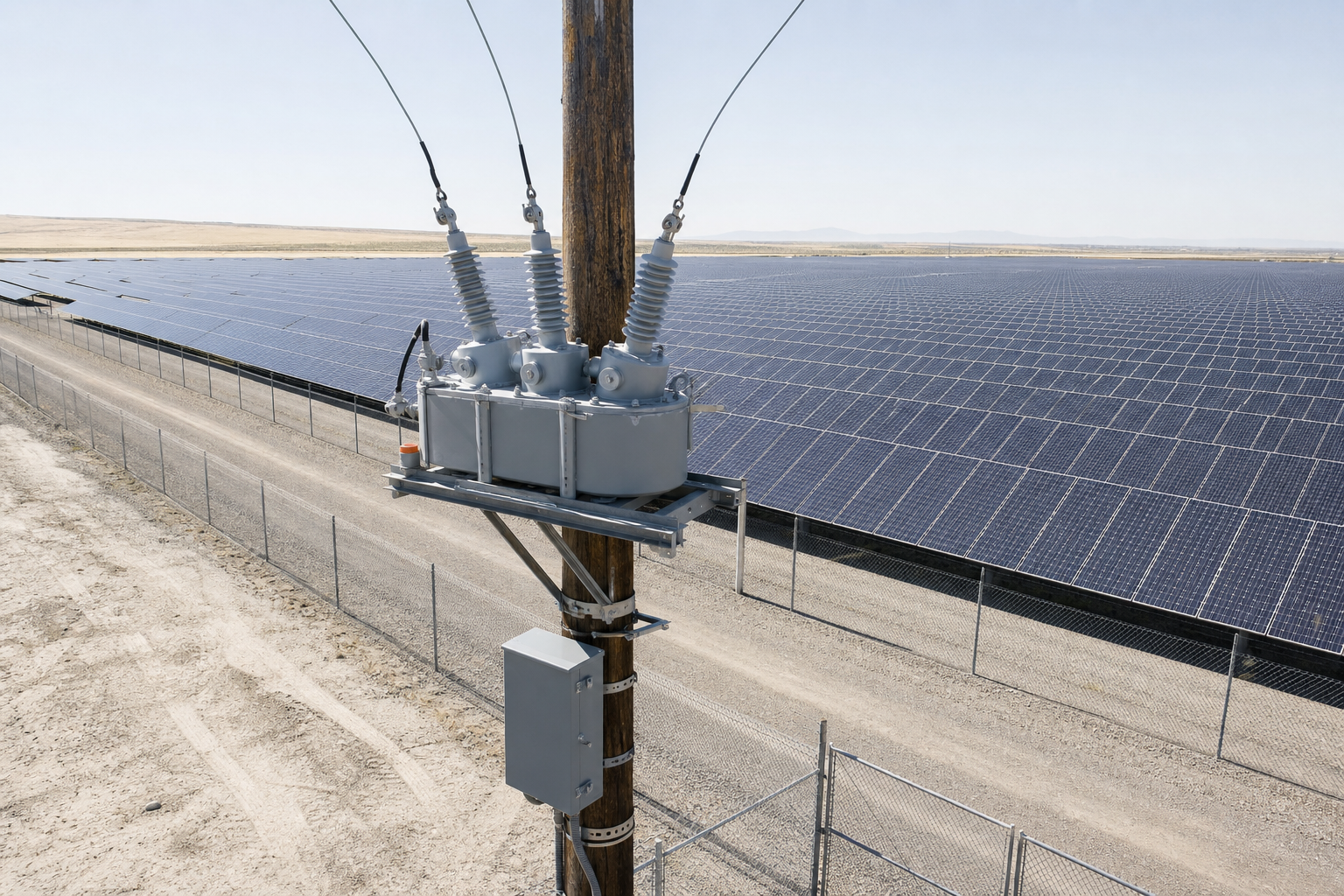
Self-healing grid hardware that detects faults and restores power automatically, so momentary faults do not become sustained outages. Sourced from proven manufacturers.
Explore the solution →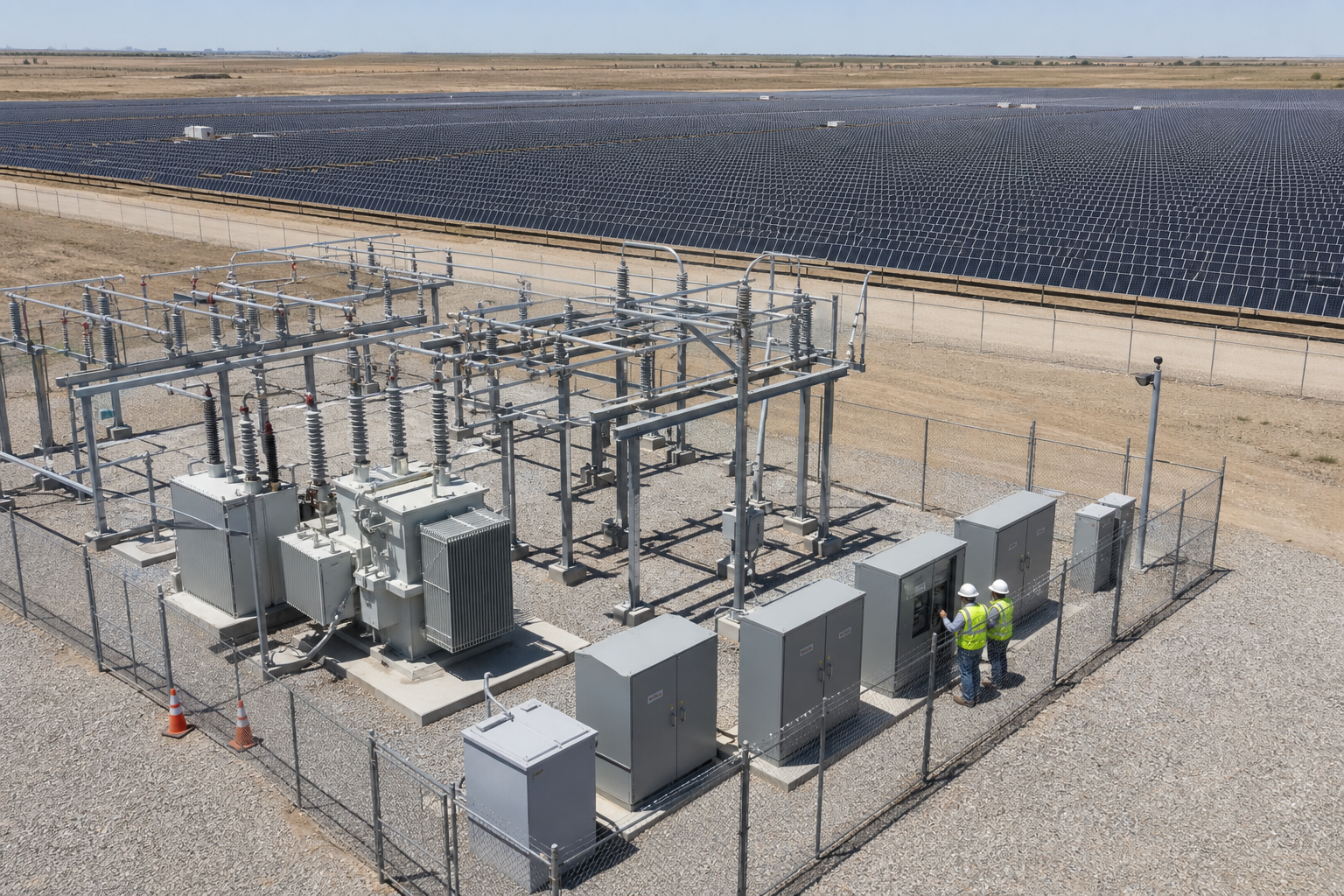
Accurate revenue metering and power-quality analysis at your interconnection point: every megawatt-hour measured, anomalies caught early.
Explore the solution →Every plant's logic is its own: its protection requirements, its sequences, its manufacturer mix. Tell us what your design specifies, and an engineer will tell you how we would program, integrate, and commission it.