
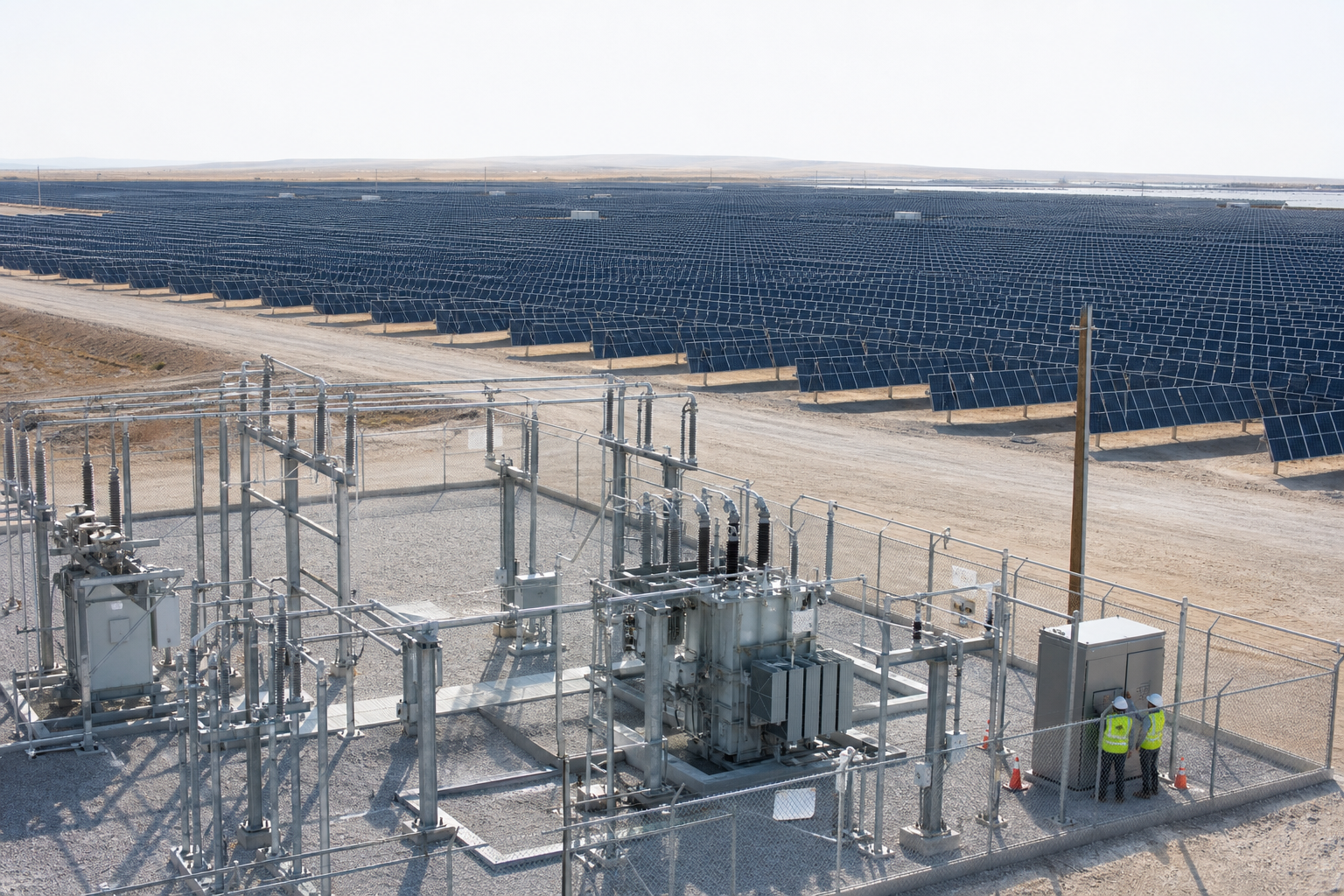
The power plant controller (PPC) answers the grid operator's question: is the plant within its limits at the interconnection, right now? It answers automatically, in real time, regulating active and reactive power without waiting for a human decision.
Plant Monitoring & Control
Your plant within its grid limits, automatically and in real time: the Power Plant Controller (PPC).
At the interconnection, the grid operator's limits are a continuous obligation. The controller holds those limits without requiring a person present to operate it.
A controller built for one manufacturer makes your inverter mix a compliance risk. We engineer it for the mix on your site, your grid operator, and your market, not for a template.
Capabilities
What the controller does for your plant
These capabilities are part of every power plant controller we deliver, configured around your plant and your grid operator's requirements.
Multi-manufacturer communication
The controller communicates with the inverters, data loggers, and plant equipment your site already runs. Equipment from different manufacturers operates as one plant.
Grid-operator interface
The controller serves as your plant's interface with the grid's system operator: the point where requirements arrive and compliance is demonstrated.
Active and reactive power regulation
The controller is the plant's main controller for active power (P) and reactive power (Q), holding the setpoints your interconnection requires.
Voltage, power factor, and frequency response modes
Voltage Control, Cos-phi, Droop Frequency, and Droop Voltage modes are part of every controller we deliver. The technical section below explains what each one holds.
Emergency plant shutdown
On operator command or on defined grid conditions, the controller brings the plant to a safe stop. The function is verified during on-site commissioning, on the real plant.
SCADA interface and remote operator control
The controller interfaces with the plant SCADA, so your operators supervise and command remotely through one system. Command and supervision stay one conversation.
Fully customizable
Control modes, setpoints, and interfaces are configured around your plant's requirements and your grid operator's, not shipped as fixed behavior you must accept.
Plant architecture
Your plant sets the configuration. PV-only or PV+BESS.
We configure the PPC for the plant you are building. PV-only and PV+BESS are different PPC configurations. On a PV+BESS configuration, batteries and the battery management system (BMS) can be bought on their own, or together with the controller as the whole plant architecture.
Explore Battery Energy Storage (BESS) →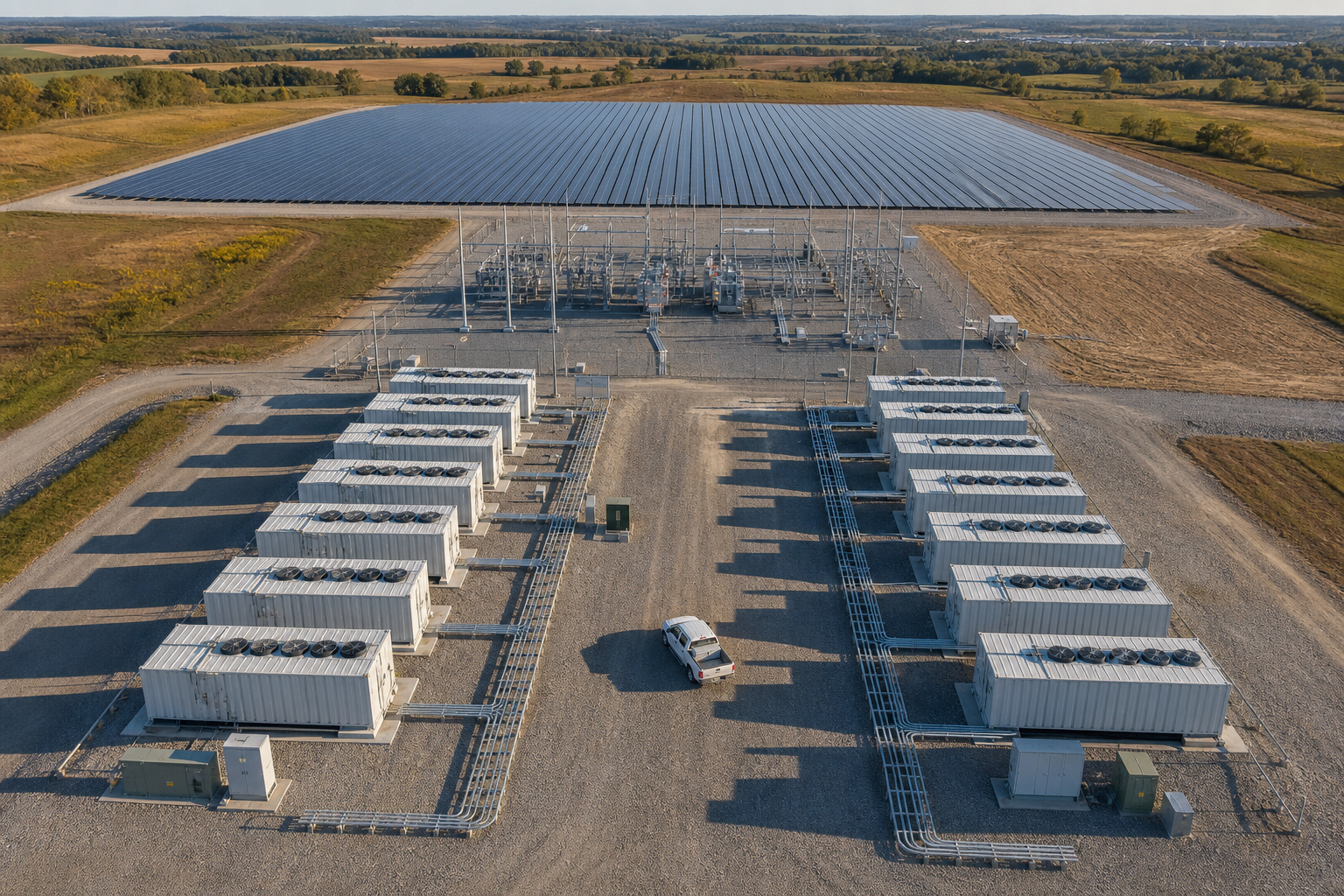
For the technical evaluator
The control modes, and what each one holds
Compliance at the interconnection is a set of specific control behaviors. Every controller we deliver is engineered to run these modes, configured to your grid operator's requirements.
Active and reactive power regulation (P/Q)
The controller adjusts the plant's active power output and its reactive power exchange at the interconnection to hold the setpoints the grid operator requires. Generation follows the available resource. The exchange at the boundary follows the requirement.
Voltage Control
The controller holds voltage at the point of interconnection within the required band by commanding reactive power across the plant's inverters.
Cos-phi (power factor control)
Where the requirement is a fixed power factor, the controller holds cos-phi at the interconnection to the set value, independent of what the plant's generation is doing.
Droop Frequency response
When grid frequency deviates, the controller adjusts active power along a configured droop characteristic, so the plant supports the grid the way your code requires.
Droop Voltage response
When voltage at the interconnection deviates, the controller adjusts reactive power along a configured droop characteristic, contributing to grid stability within the required curve.
Emergency plant shutdown
The controller executes a plant shutdown on operator command or on defined grid conditions, bringing generation to a safe stop in the required sequence.
Grid-operator interface
The controller is the plant's interface with the grid's system operator. It receives the operator's requirements and setpoints, and it holds the plant to them.
Which modes your plant must run, and with which parameters, depends on your market and your grid operator. That configuration is part of our engineering, not an add-on you discover later.
Hardware and know-how
Top-tier hardware, integrated with the inverter mix you already have
We integrate the power plant controller on top-tier industrial hardware platforms, such as Rockwell Automation and Schweitzer Engineering Laboratories (SEL). The platform is chosen around your plant's standards and your project's requirements. The hardware we supply carries a warranty on supplied equipment, with terms defined in your contract.
Manufacturers we integrate with






Our integration know-how spans the inverter and data-logger manufacturers plants actually run: SMA, Fronius, ABB, Sungrow, and Huawei. If your mix includes others, we engineer the communication. Multi-manufacturer communication is the baseline, not the exception.
PPC vs SCADA: the controller commands; the SCADA supervises.
The SCADA answers the operator's question: what is the plant doing, what has it done, and what needs attention? Its instruments are supervision, visualization, alarms, and the historical record.
Compliance is the controller's job. Visibility is the SCADA's. The two must share one data model. When they come from different vendors, every grid event risks becoming two vendors pointing at each other. When they are engineered as one system, command and supervision are the same conversation.
That is how we deliver them: the PPC commanding, the SCADA supervising, one accountable partner for both.
Related solutions
Engineered to work as one system
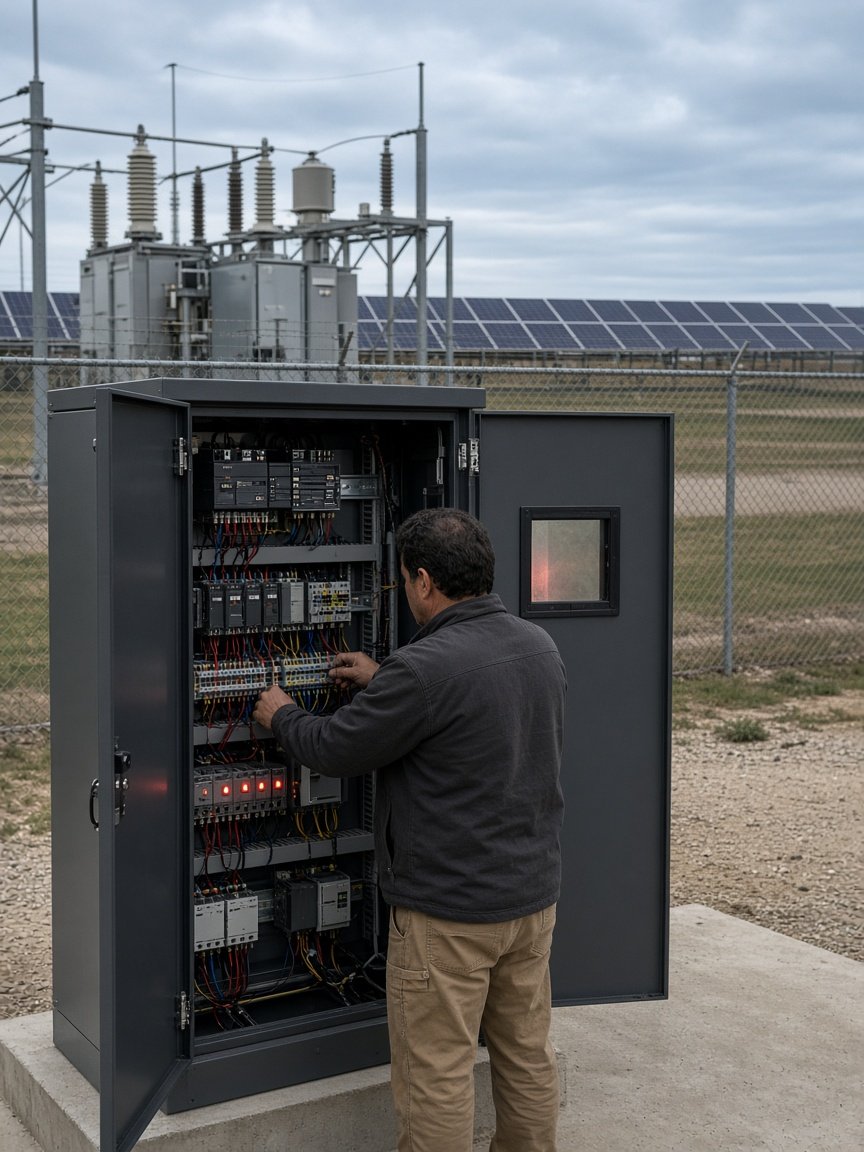
The controller is one part of your plant's monitoring and control. These are the pieces it is engineered to work with.
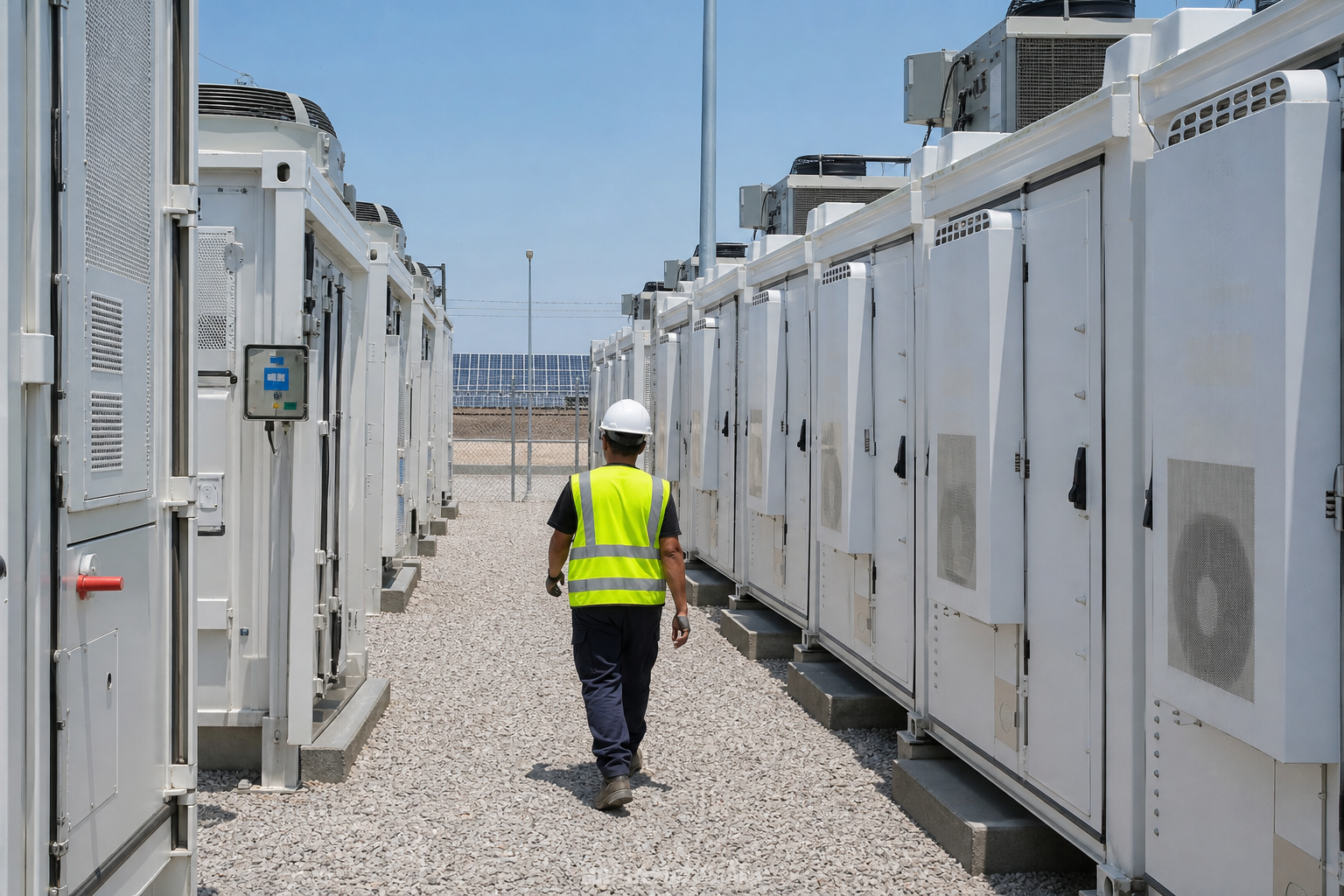
Battery Energy Storage (BESS)
Store energy when it is abundant and dispatch it when it is valuable. We configure the PPC for PV-only or PV+BESS—different configurations for the plant you are building.
Explore the solution →
PLC Integration
Industrial controllers programmed for your plant's protection and control logic. The PPC commands; the PLC executes, in milliseconds, when it matters.
Explore the solution →
SCADA & Energy Management System (EMS)
Real-time monitoring and control of your entire plant in one system, whatever the manufacturer. The controller commands; the SCADA supervises.
Explore the solution →Bring us your grid code and your inverter list. An engineer will read them with you.
Every plant's requirements are its own: the market's grid code, the operator's interface, the manufacturer mix on site. Tell us what your plant runs on, and we will tell you how it holds its limits.